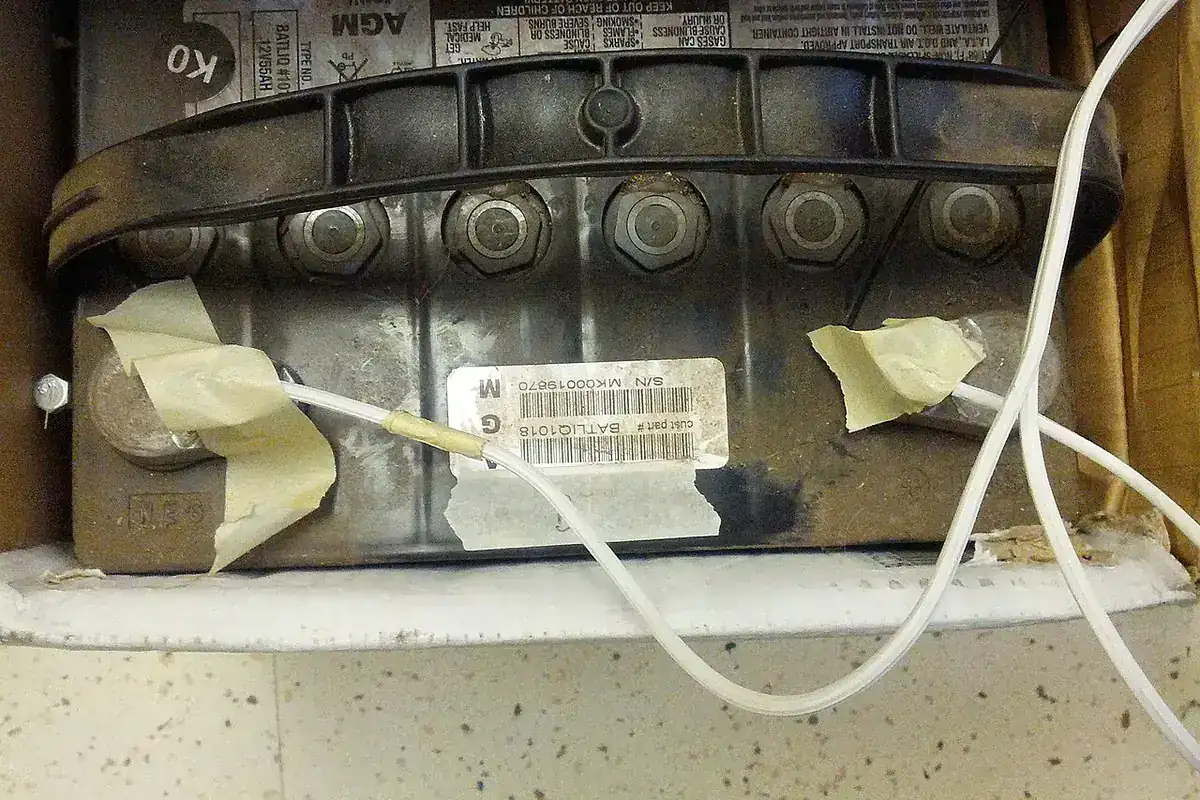
Battery registration tells the car's computer that a new battery was installed, and sometimes what type and capacity it is. Many newer European cars, and plenty of other start-stop cars, need it. Skip it on a car that requires it and the car may keep charging the new battery like a worn one. That can shorten its life and cause electrical or start-stop problems. It takes a scan tool and a few minutes.
Why cars do this
As a battery ages, it accepts charge differently. Cars with a battery management system adjust charging to match. They also use battery data to decide when start-stop is allowed and when to shut off accessories to save power.
When you put in a new battery, the car has no way of knowing unless you tell it. It keeps applying the old battery's charging profile. A new battery charged like an old one can be overcharged, which shortens its life.
Some cars also need to know the battery's type (AGM or EFB) and capacity. If you change those, the car has to be told.
Which cars need it
It varies by make, model and year. Common ones:
- Many BMW, MINI, Mercedes-Benz, Audi, Volkswagen, Porsche, Volvo, Jaguar and Land Rover models.
- Many newer vehicles with start-stop from other makers, including some Ford, GM and Stellantis trucks and SUVs.
- Some hybrids.
Even within one brand, some models need it and some don't. If your car has a sensor on the negative battery terminal, it's a good sign the car tracks the battery.
What happens if you skip it
On a car that needs it, you might see:
- Start-stop that doesn't work well or at all.
- A new battery that wears out early.
- Electrical warnings or odd behavior.
- Battery-related messages on the dash.
It won't always show up right away. That's the sneaky part.
Other resets
A battery swap on some cars also needs:
- Window auto-up and pinch protection relearned.
- Steering angle sensor recalibrated.
- Idle relearn. The car may idle a bit rough for a short drive.
- Radio or navigation codes on some older cars.
- Sunroof initialization.
A memory saver during the swap helps avoid many of these, but not all.
How we do it
- Confirm whether your car needs registration.
- Install the correct battery type and capacity.
- Connect a scan tool and register the battery.
- Do any other resets the car needs.
- Check charging voltage and clear any codes the swap caused.
All on site. See AGM and start-stop battery replacement and what happens during a mobile replacement.
Changing the battery type
If you move from a flooded battery to AGM, the car should be coded for AGM if it supports it, so it charges at the right voltage. Moving down from AGM to flooded on a car that needs AGM isn't a good idea at all. AGM vs. flooded.
If someone else replaced it
If your battery was replaced recently and you're not sure it was registered, and you're seeing start-stop problems or the new battery seems weak already, it's worth checking. Why a new battery died.
Common questions about registration
Do I need it on a car without start-stop? Sometimes. Some cars track battery age even without start-stop, especially European models. Others don't care at all. The year, make and model tell us.
Can I register it myself? Some higher-end scan tools can do it, and some apps with an OBD dongle support certain brands. A basic code reader usually can't.
What if I switched to a larger battery? On cars that store battery capacity, the car should be told the new capacity, not just that a battery was replaced. Otherwise it may charge as if it were the old size.
Does registration void anything? No. It's part of a correct installation on cars that require it.
Why it matters more here
In Florida, the heat already shortens battery life. A battery that's also being charged wrong because the car wasn't told about it has two things working against it. On cars that need registration, it's not an extra. It's part of doing the job right.
Other things people ask about this
Does my car need battery registration?
Many European cars and start-stop vehicles do. Give us the year, make and model and we’ll check.
What happens if a new battery isn’t registered?
On cars that require it, the car may charge it incorrectly, which can shorten its life and cause start-stop or electrical problems.
Can you register a battery on site?
Yes, when your car needs it, we register it during the install.