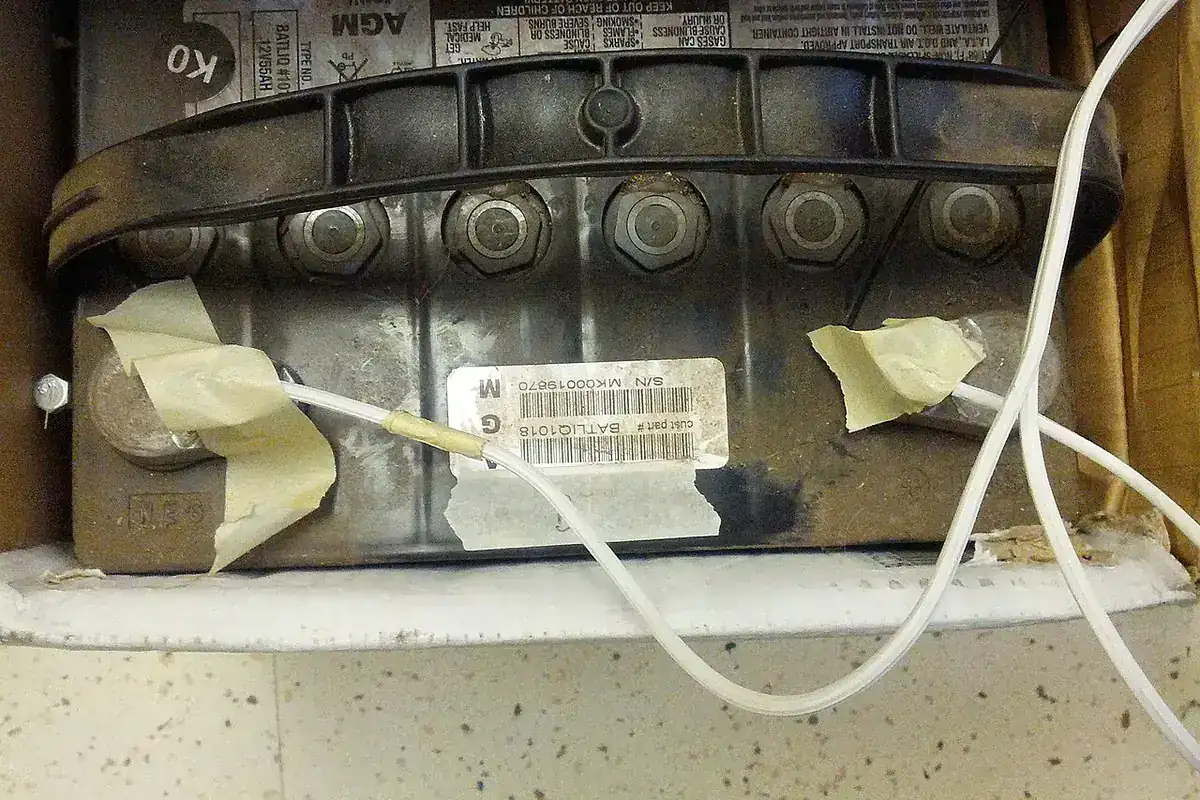
We replace batteries in full-size pickups, three-row SUVs, work trucks and diesels with two batteries, right where they're parked. Driveway, job site, ranch gate, boat ramp lot. We test the battery and charging system, match the size and capacity the truck calls for, and replace both batteries together on dual-battery setups.
Trucks are harder on batteries here
A truck in Tampa Bay lives a rough life. It sits on a job site in Plant City from 6 a.m. to 4 p.m. in full sun. It idles in line at the Port. It runs a light bar, an inverter, a fridge, a tool charger, sometimes all at once. And a lot of trucks are big-displacement engines that take more to crank.
Heat is the real problem. It speeds up everything that wears a battery out, and a dark truck hood in a gravel lot gets ridiculous by mid-afternoon. Florida heat and car batteries gets into the details.
Getting the battery right
Group size and terminals. Trucks use a lot of different sizes, and some have side terminals or both. The battery has to sit in the tray, take the hold-down and line up with the cables without stretching anything.
Cranking amps and reserve. We meet or beat what the manufacturer specs. If you've added a winch, a big stereo or a fridge, tell us. Reserve capacity starts to matter.
Type. A lot of newer trucks and SUVs have start-stop and need AGM or EFB. Some full-size SUVs have AGM from the factory with or without start-stop. We check.
Two batteries. Many diesel pickups use two batteries wired together. When one goes, the other is usually close behind, and a new battery paired with a tired one gets dragged down. We test both and normally replace them as a pair. We'll explain it either way.
Work trucks and job sites
If your truck died on a site, we come to the site. Tell us the address and where on the property the truck is, and whether we need to check in at a gate. Got several trucks on the same yard? See fleet and workplace service. We can test the whole row in one trip.
Towing
Boat ramps at Ben T. Davis, Fort De Soto, the Courtney Campbell, Upper Tampa Bay Park. If your truck won't start with the trailer still on, call. As long as it's safe to work, we can usually replace the battery right there. Our job is the truck's starting battery. Boat batteries are a different animal.
Accessories that keep killing batteries
If the truck keeps going dead even after a new battery, something is drawing power when it's off. Dash cams wired hot, an aftermarket alarm, an inverter, a stuck relay. We test the charging system and look for the obvious drains. Battery dies overnight covers what to look for.
Price
Most trucks and SUVs fall in our standard range, $249 to $329, or the AGM range, $329 to $449, depending on what the truck needs. Dual-battery trucks are quoted for both. You get the number before we start.
Questions we get about this
Do I need to replace both batteries on my diesel?
Usually that’s the right call, because a new battery paired with a worn one gets pulled down. We test both and explain what we find.
Can you come to a job site?
Yes. Tell us the address, where the truck is, and any gate or check-in.
My truck has a winch and a light bar. Does that matter?
It can. Extra loads may call for more reserve capacity. Tell us what’s on the truck.