On the phone
We'll ask four things: what you drive (year, make, model, engine if you know it), where it is, what it's doing, and whether someone will be with it. From that we look up the battery your car takes and give you the price. We'll also give you an honest idea of when we can get there. Traffic on the Howard Frankland at 5:30 is what it is, and we'd rather tell you than guess low.
A pin drop by text is the easiest way to show us where you are. In a garage, the level and the nearest stairwell help. In a gated neighborhood, the gate code or call-box steps.
Getting to you
Homes, apartment lots, office garages, hospital parking, store lots, beach lots, job sites, and the shoulder when it's actually safe to work there. If you're stuck on a bridge or in a travel lane, call 911 first. Your safety matters more than the battery.
Testing
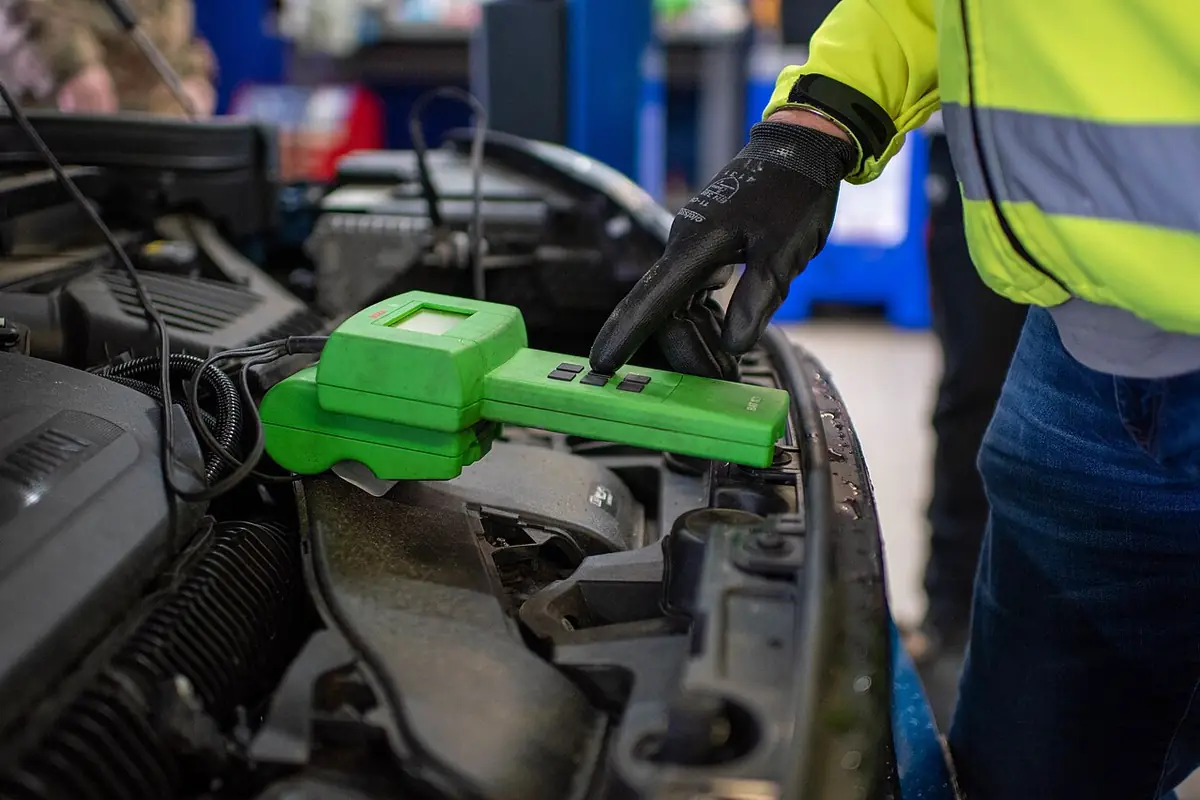
Before anything comes out of the car we check three things. The battery's health and state of charge. The alternator's output with the engine running, if we can get it started. The cables, clamps and grounds. Plenty of no-starts turn out to be a corroded clamp or a ground that worked loose. If your battery is fine, you'll hear that, and you'll pay for the test or the jump instead of a battery. Testing has more on what we measure.
The swap
Once you OK the price: negative cable off first, then positive, then the hold-down. We clean the clamps and the tray, drop the new battery in, tighten the hold-down so it can't shift, connect positive then negative, and protect the terminals. If your car had a heat sleeve or a vent tube, it goes back on.
On a lot of newer cars we use a memory saver so you don't lose radio presets and settings. Some cars need a window or sunroof relearn after. If your car needs the new battery registered, we do that too. Registration explained.
Before we leave
We start the car and check the charging voltage with the new battery in. You get an invoice with the battery, the price and the warranty terms. The old battery goes in our truck for recycling.
Most of this takes 20 to 45 minutes once we're parked. Batteries under a seat or under the trunk floor take longer.
Questions
Do I need to be there?
It helps, so we can show you the test and confirm the price. If you can’t be, call and we’ll work out access and approval with you first.
Can you work in a parking garage?
Usually. Tell us the garage name and level so we can plan for clearance.