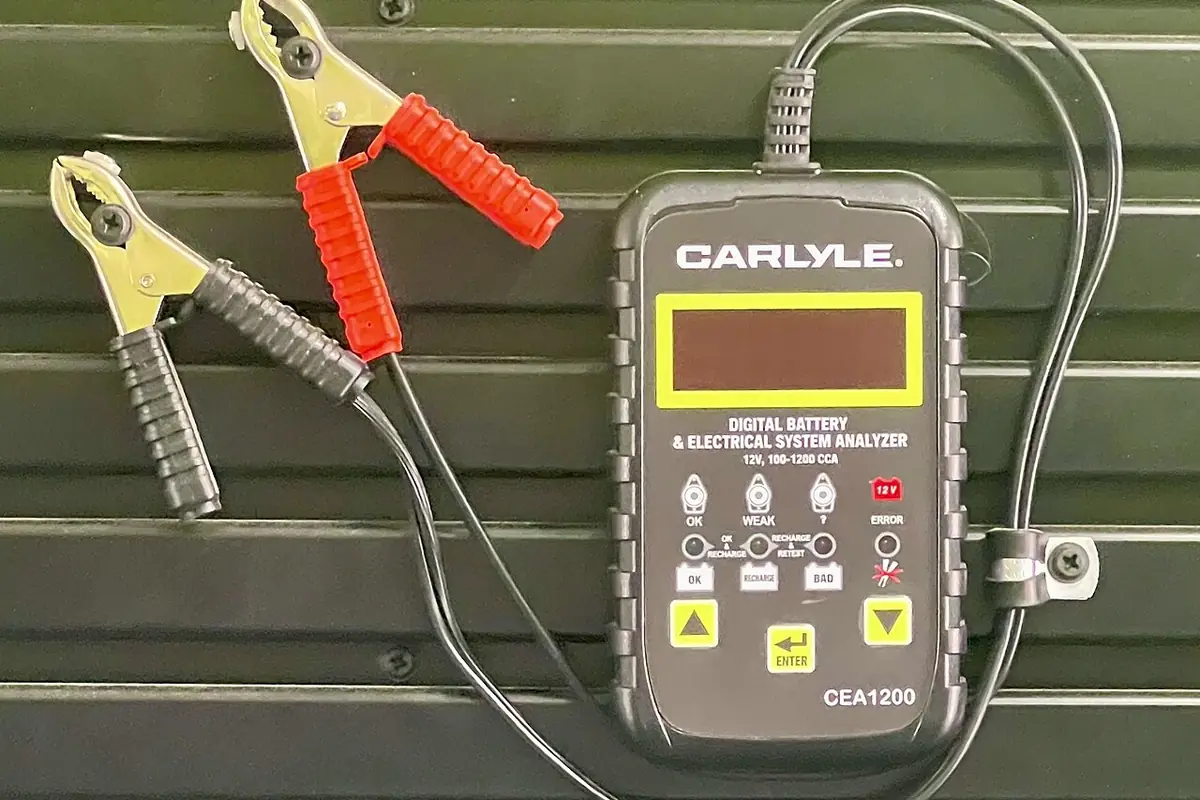
The numbers that matter most are measured CCA compared with the battery's rated CCA, which shows health, and state of charge, which shows how full it is. A battery can be fully charged and still unhealthy. Next come cranking voltage, which shows how it does under a real start, and charging voltage, which shows whether the alternator is doing its job. Resting voltage by itself doesn't tell you much.
Resting voltage
This is what a basic voltmeter reads with the car off. A fully charged 12-volt battery that's been sitting reads somewhere around 12.6 to 12.8 volts. Around 12.4 is roughly three-quarters charged. At 12.0 or below it's quite low.
Here's the catch. Resting voltage tells you about charge, not health. A worn-out battery can show 12.6 volts and still collapse the moment the starter asks for current. And right after driving, a "surface charge" can make a battery look better than it is.
So voltage alone isn't a test. It's a hint.
Measured CCA vs. rated CCA
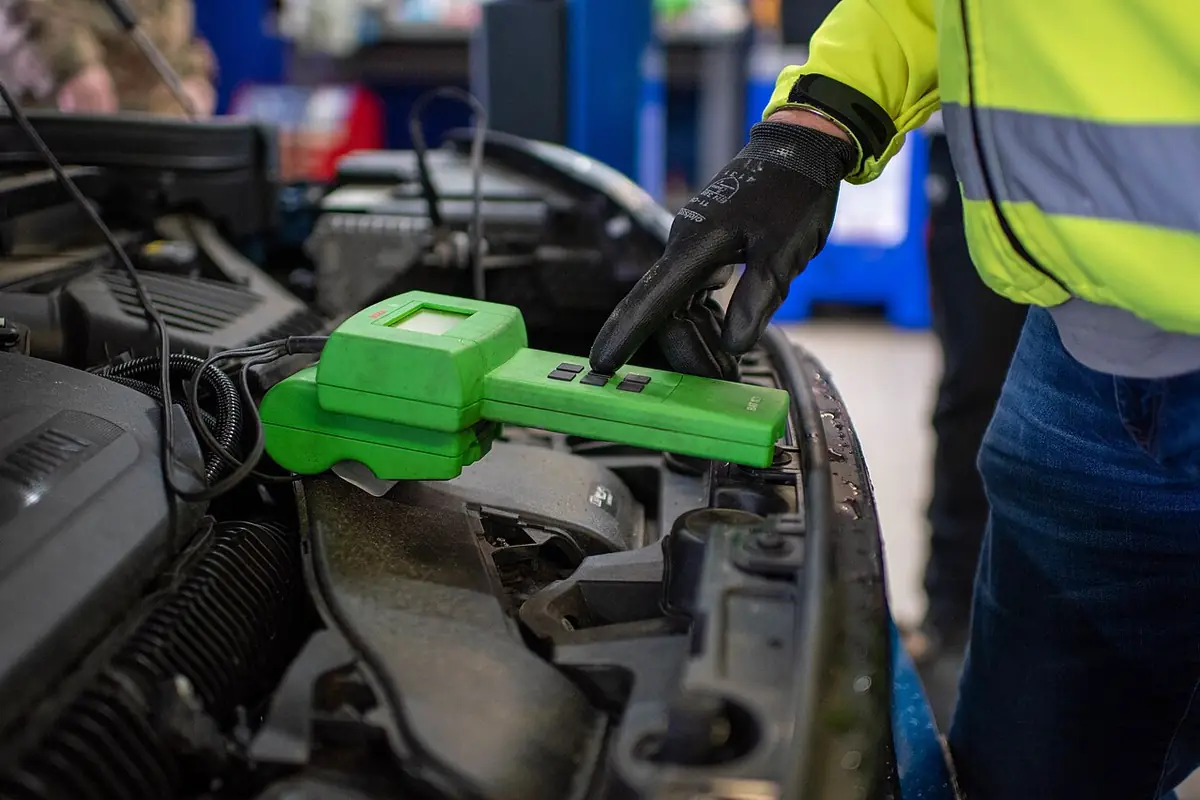
Most modern testers estimate the battery's cold cranking amps by sending a small signal through it and measuring its internal resistance. They compare that to the rating on the label.
- Measured close to rated: healthy.
- Well below rated: worn.
Some testers show this as a percentage, called state of health. Each tester has its own thresholds, so treat the tester's verdict as the headline, not the exact percentage.
State of charge
How full it is right now, as a percentage. A healthy battery that reads low just needs charging. An unhealthy battery that reads full is still unhealthy.
That's why a good tester looks at both. The four combinations:
- Healthy and charged: good battery.
- Healthy but low: charge it, then figure out why it was low.
- Weak but charged: replace soon.
- Weak and low: charge and retest, but usually replace.
The verdict
Most testers give a plain answer:
- Good battery.
- Good, recharge.
- Charge and retest. The battery is too low to judge. Charge it fully and test again.
- Replace battery.
- Bad cell. Usually means one of the six cells is failing. Replace it.
Cranking test
The tester watches voltage while you start the car. It will drop, that's normal, but it shouldn't fall too far. A big drop points to a weak battery or poor connections. A tester often reports this as normal or low.
Charging test
With the engine running, the alternator should hold the system somewhere around 13.5 to 14.8 volts, depending on the car. Many newer cars vary it on purpose. The tester checks it at idle, then with loads like headlights, rear defrost and blower on.
- Too low: not charging enough. The battery will slowly drain.
- Too high: overcharging. That cooks batteries.
- Ripple: a bad diode in the alternator can show up as AC ripple. Some testers check this.
Battery, alternator or starter goes deeper.
Things that throw off a test
- Surface charge right after driving. Turning the headlights on for a minute first helps.
- Wrong CCA entered. If the rating entered in the tester is wrong, the result will be wrong.
- Dirty or loose terminals. We clean before we judge.
- Very low charge. A flat battery needs a charge before a fair test.
- Heat. Batteries read differently hot and cold. Good testers compensate.
Why we test before replacing
A test keeps us honest. If it shows a healthy battery, we tell you. If the charging system is the problem, a new battery won't fix it. We'd rather show you the result than sell you something that doesn't help.
When we test on site, we'll walk you through the result. See battery and charging system testing.
Free tests elsewhere
Many parts stores test batteries for free, which is useful. Just know the car needs to get there, and a quick handheld test can miss things. If it says borderline, take that seriously, especially if the battery is old. Signs your battery is dying.
Other things people ask about this
What voltage means a car battery is bad?
Voltage alone can’t tell you. A worn battery can read 12.6 volts and still fail under load. A load or conductance test tells you health.
What does “charge and retest” mean?
The battery is too low to judge. It needs a full charge and a second test.
What should my alternator read?
Usually somewhere around 13.5 to 14.8 volts with the engine running, depending on the car.