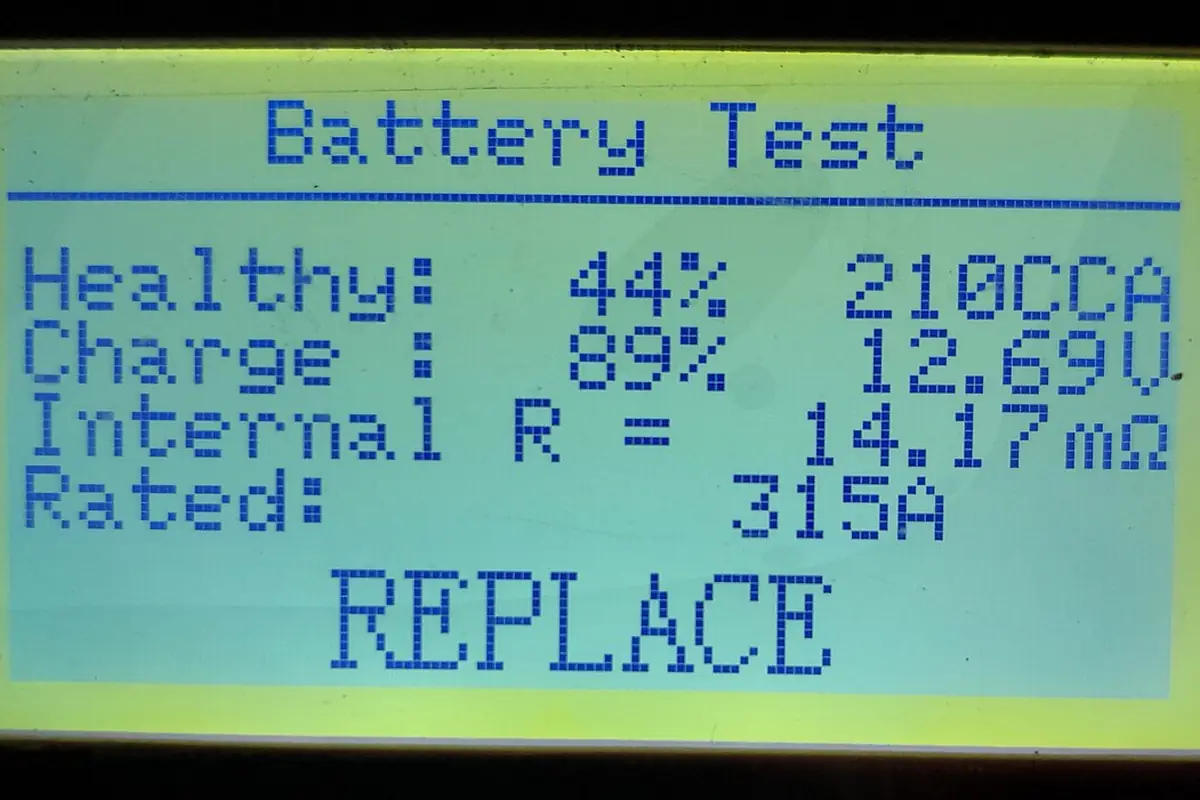
The most common sign is a slow crank. The engine turns over lazily, rrr, rrr, rrr, before it catches. After that come clicking with no crank, lights that dim hard while you start, a start-stop system that quit shutting the engine off, and a battery that's been through three or more Florida summers. Two of those at once and it's time for a test.
Why it sneaks up on you
A battery doesn't fail in one day. The lead plates inside lose material a little at a time, sulfate builds up on them, and in our heat the grids corrode faster than they would up north. Capacity drops month by month.
You don't feel it for a long time because a warm engine in Tampa doesn't need much to start. Then one morning the battery has less left than the starter wants, and you get nothing. The warning signs are the gap between "weak" and "dead," and here that gap can be short. Florida heat and car batteries explains why.
Slow cranking
This is the big one. It usually shows up after the car has sat overnight or over a weekend, then seems to go away after a drive. People take that as a sign the battery is fine. It isn't. It means the battery recovers a bit with a charge but can't hold enough to start comfortably after sitting.
Sometimes the cause is a corroded or loose clamp instead of the battery. Either way, get it tested. How to read a battery test shows what we look at.
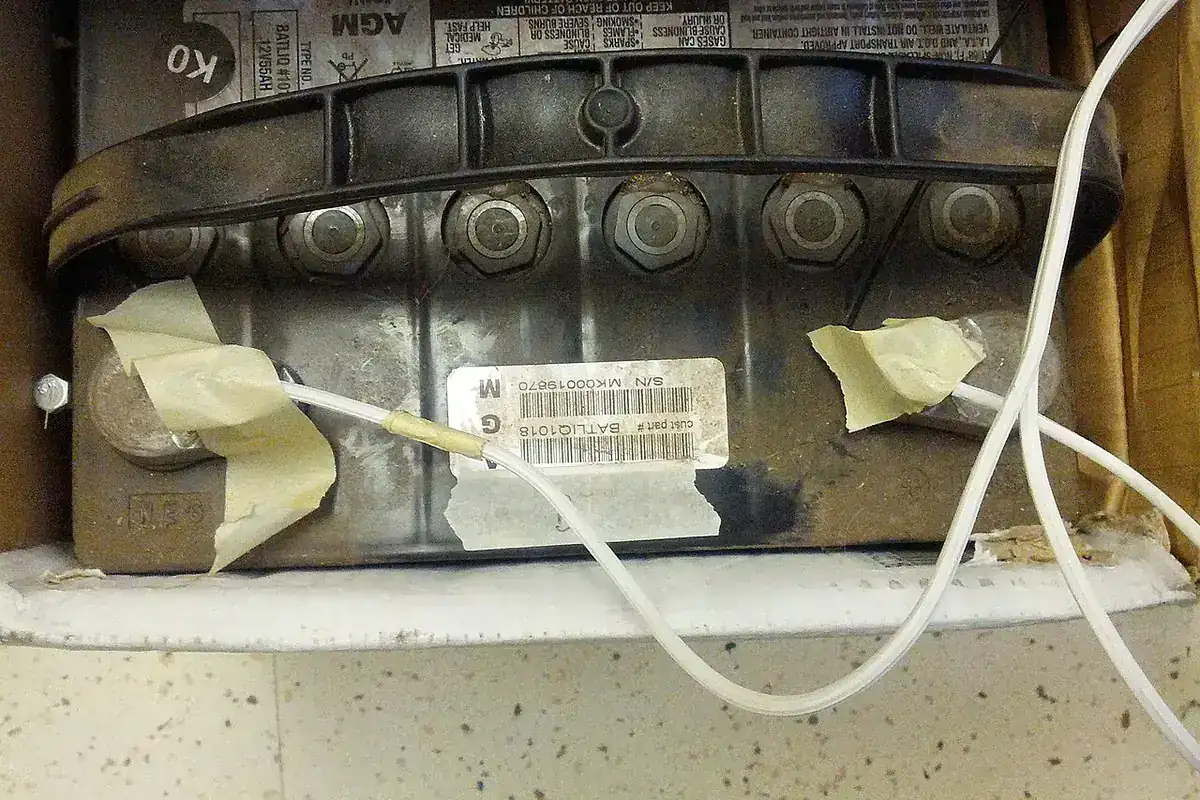
Clicking
A fast click-click-click with no cranking almost always means a low battery. There's enough voltage to pull in the starter solenoid, not enough current to spin the motor, so the solenoid chatters.
A single solid click with bright dash lights is different. That points more toward the starter or a bad connection to it. Battery, alternator or starter walks through telling them apart.
A jump start will usually get a low battery going. Just know that a battery drained flat doesn't always come all the way back.
Lights that dim when you start
Some dimming during cranking is normal. Headlights that nearly go out, or a dash that blacks out and reboots, is not. It means voltage is collapsing under load.
The battery light
That little battery symbol on the dash is really a charging-system light. Most of the time it means the alternator isn't keeping up, though a bad battery or cable can set it off too. If it comes on while you're driving, the car is living off the battery, and it will die when the battery runs out. Head somewhere safe and call. Our battery and charging test checks both sides.
Start-stop quit working
Cars with automatic start-stop watch the battery closely. When charge or health drops, the car stops shutting off at lights to protect itself. So if your SUV used to go quiet at every red light on Dale Mabry and now it never does, the battery is a suspect.
Not the only suspect, though. Start-stop also stays off when the A/C is working hard, which is most of the summer here, or when the engine is cold or the steering wheel is turned. Look for a pattern across a week or two, not one afternoon. Start-stop cars explained.
Electrical weirdness
Radio presets that keep resetting. A clock that loses time. Random warning lights that flash on at startup and then clear. Modern cars get cranky at low voltage, and a weak battery often shows up as glitches before it shows up as a no-start.
These can come from other faults too, so a test is better than a guess.
Corrosion on the terminals
White, green or blue crust on the posts or clamps adds resistance and can make a decent battery act weak. A little is common, especially near salt water. A lot, or corrosion that keeps coming back fast, can mean the battery is venting or a seal is failing. Battery corrosion.
A swollen or leaking case
This one isn't a "soon." If the sides of the battery bulge, or you see wet acid on it, or smell rotten eggs under the hood, stop using it and don't try to jump it. Overcharging and heat are the usual causes. Call us or a pro to replace it.
Age
Age isn't a symptom but it belongs on the list. Here, a lot of batteries are tired by the third summer, some go sooner, some last longer. If yours is past three years and showing any other sign on this page, assume it's the battery until a test says otherwise. How long batteries last in Florida and reading the date code help you figure out how old yours is.
What isn't the battery
Some no-starts look like battery trouble and aren't:
- The engine cranks at normal speed but won't fire. That's usually fuel, spark or a security system, not the battery.
- The car starts fine but dies while you drive. Look at the alternator first.
- Everything is dead, even after a good jump. Could be a main fuse, a cable or the battery itself. Worth a test.
What to do
If you're seeing one sign, get the battery tested soon, ideally before a long trip or a busy week. If you're seeing two or more, or the car has already needed a jump, plan on replacing it. A battery that has failed you once in this heat usually does it again.
We test on site before we sell anything. If the battery is fine, we tell you that and point you at whatever the real problem looks like.
Other things people ask about this
Can a battery test good and still be dying?
Yes, sometimes. A test done right after a long drive can look better than the battery really is. We check voltage, cranking performance and the charging system together, and we’ll tell you if the result is borderline.
Is slow cranking always the battery?
Usually, but not always. Corroded clamps, a worn cable or a tired starter can cause it too. A test sorts that out in a few minutes.
How fast does a battery go from slow cranking to dead?
It varies. Some last weeks, some quit the next morning. In summer heat, don’t count on much time.