
Every start pulls a big burst of energy from the battery. The alternator then needs time to replace it, and while it's doing that it's also running the A/C, fans, lights and electronics. On a short trip, especially in stop-and-go traffic, it never catches up. Repeat that for weeks and the battery sits partly charged, which wears it out faster. Try to work in a 30-minute drive once a week or so.
The math, roughly
Starting draws a lot of current for a few seconds. Then the alternator recharges. How fast depends on the car, engine speed and how much else is running. At idle and in slow traffic, with the A/C on high, there may be little left over for the battery.
A five-minute drive to the store, five minutes back, and an engine that spent half of it idling at lights. The battery comes home with less than it left with.
Why partial charge hurts
A lead-acid battery that sits below full charge builds up sulfate crystals on its plates. At first they dissolve back when it gets charged. Left long enough, they harden and stay, and the battery loses capacity for good. Heat speeds the whole thing up. Florida heat and car batteries.
So the short-trip problem isn't just "the battery is low today." It's that a battery living at partial charge ages faster.
Start-stop makes it harder
Start-stop cars restart the engine at every light and run things off the battery while it's off. On short trips that's even more drain and even less time to recover. That's one reason start-stop cars need AGM or EFB batteries. Start-stop cars explained.
Who this hits
- Neighborhoods where the store, school and gym are all close, like Seminole Heights, South Tampa, downtown St. Pete and Dunedin.
- Retirees and anyone who drives a few miles a few times a week.
- The second car that does school runs.
- People who work from home and drive only for errands.
How long to drive
There's no exact number, but a steady 30 minutes or more, mostly at speed, does a lot more than several short trips. Highway driving is better than idling in a lot.
Idling in the driveway doesn't really work. At idle, the alternator may not put out much more than the car uses.
What helps
- Combine errands into one longer drive.
- Take the long way once a week. The Courtney Campbell, the Bayway, Bayshore.
- Turn off what you don't need on short trips: seat heaters, rear defrost, extra chargers.
- Use a maintainer if the car mostly sits. Leaving your car parked for weeks.
- Get it tested around the three-year mark.
Signs short trips are catching up
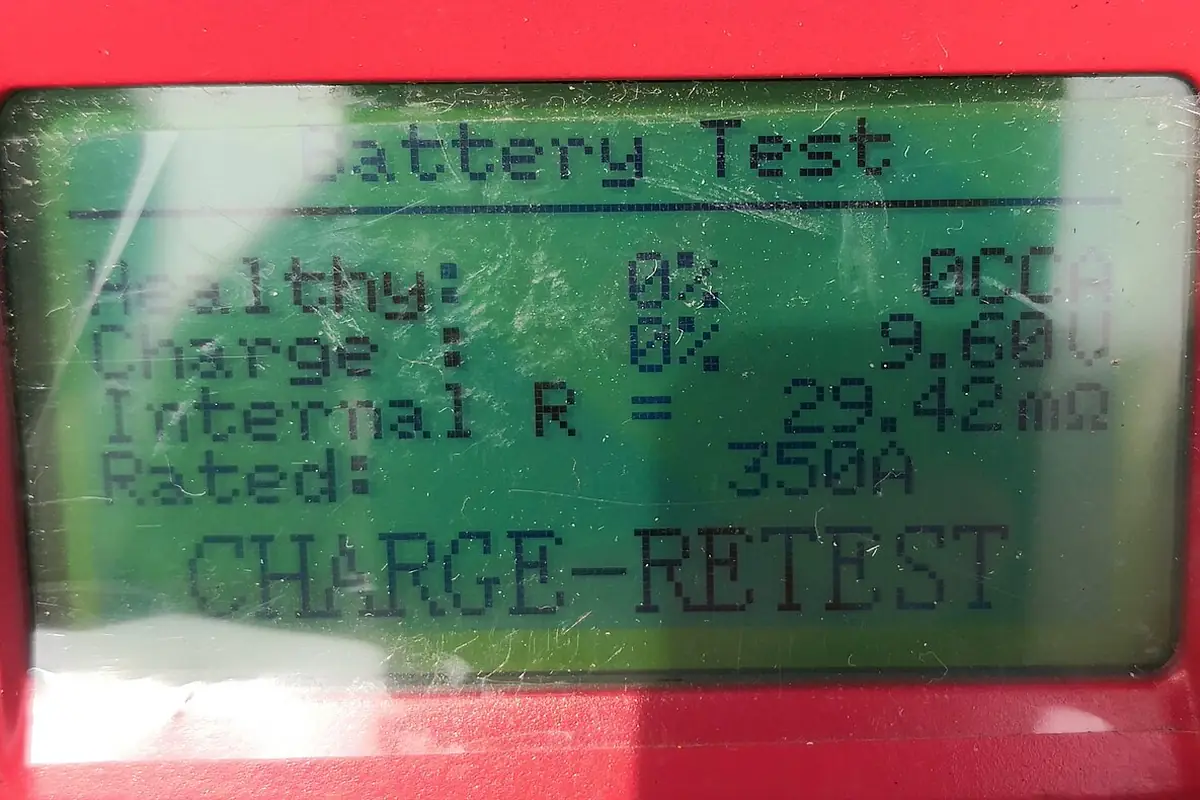
Slow cranking after the car sits, start-stop that won't engage, a battery that tests "good, recharge," or a car that needs a jump after a quiet weekend. Signs your battery is dying.
AGM can help
If your car takes short trips most of the time, an AGM battery can handle partial charge better than a standard one, even if your car didn't come with AGM. AGM vs. flooded.
What we can do
We test the battery and charging system on site. If the battery is just low, we tell you. If it's been worn down by months of short trips, we'll show you the result and the price. See battery testing.
A Tampa Bay example
Say you live in Seminole Heights and work from home. Most days you drive to the coffee shop on Florida Avenue, the grocery store a mile away, and back. In summer, the A/C is on high the whole time, and half the drive is sitting at lights. Your car might go a week without ever running more than ten minutes at a time.
That battery is living in a hot engine bay, rarely fully charged, and getting a big drain every morning. It won't fail right away. But a year or two in, it'll start cranking slower after a quiet weekend, and one morning it won't.
The fix isn't complicated. Once a week, take a longer drive. Out to the Courtney Campbell and back, or up the Veterans. It helps more than you'd think.
Other things people ask about this
Do short trips really drain a car battery?
Yes, over time. Starting takes a lot out, and short trips don’t give the alternator time to put it back.
Does idling charge the battery?
Not much. At idle, the alternator may barely cover what the car is using.
How often should I take a longer drive?
A steady drive of 30 minutes or more about once a week helps a lot.